
How AI Automation Fixes the Back-Office Headaches in Your Plumbing Business
Contractors, Plumbing, AI business automation
How AI Automation Fixes the Back-Office Headaches in Your Plumbing Business
Missed calls, messy schedules, slow estimates, and chasing reviews can quietly cost a plumbing shop thousands every month. Here’s how AI can quietly handle the grind so you can stay on the tools and grow the business.

The Everyday Scenario That’s Costing You Work
You’re under a sink, covered in drywall dust, torch in one hand, wrench in the other. Your phone buzzes in your pocket. You can’t stop mid-solder, so the call goes to voicemail. By the time you listen and call back, they’ve already booked another plumber who “actually answered the phone.”
That’s the core problem AI automation for local businesses is built to solve: keeping your business responsive and organized while you’re actually doing the work. Let’s break down the five big pain points and how tools like an AI receptionist for small business, AI voice agents, and an AI personal assistant can take them off your plate.
1. Missed Calls During Jobs: AI Receptionist That Never Sleeps
Every missed call is a maybe-job that often becomes a “we went with someone else.” An AI receptionist for small business answers the phone 24/7, speaks naturally, and follows your script:
- Greets callers with your business name and service area
- Asks a few key questions (location, issue, urgency)
- Books the job directly into your calendar or collects info for a call-back
Modern AI voice agents for small business use natural language processing (the same tech behind tools from OpenAI and Anthropic) to sound less like a robot and more like a calm, consistent office manager. As Forbes and Gartner have both pointed out, these AI receptionists are quickly becoming a standard part of small business customer service, not a luxury add-on.
2. Slow Follow-Up on Estimates: AI That Chases the Paperwork For You
You finally get back to the truck at 7:30 p.m., scroll your texts, and see three people still waiting on estimates. By the time you send them tomorrow, one has already booked someone else. That’s pure friction AI can remove with simple AI business automation tied into email and text.
With basic CRM management and automation tools like Zapier or Make, you can trigger follow-ups automatically. For example, when you mark a quote as “Sent” in your CRM, an AI assistant can send a friendly check-in text 24 hours later if there’s no response:
const quote = crm.getDeal(dealId);

if (quote.status === 'Sent' && quote.followUpDueToday) {
  aiAgent.sendSms({
    to: quote.customer.phone,
    message: `Hi ${quote.customer.firstName}, this is ${quote.businessName}. \
Just checking in to see if you had any questions about the estimate we sent.`
  });
}
You don’t have to write this code yourself—platforms already provide these building blocks—but this is exactly what’s happening behind the scenes: rules and AI working together so no estimate quietly dies in your inbox.
3. Scheduling Chaos: AI Calendar and Dispatch That Actually Stay in Sync
Double-booked techs. Gaps in the day. Ten-minute jobs slotted an hour apart. When scheduling lives in your head and a paper notebook, it’s almost impossible to keep clean as you grow beyond “just you and a helper.”
An AI personal assistant can take over calendar management: reading your availability, assigning jobs by location and skill, and texting confirmations and reminders automatically. Your AI receptionist or voice agent doesn’t just say “we’ll call you back”—it can actually book the slot in your shared calendar in real time.
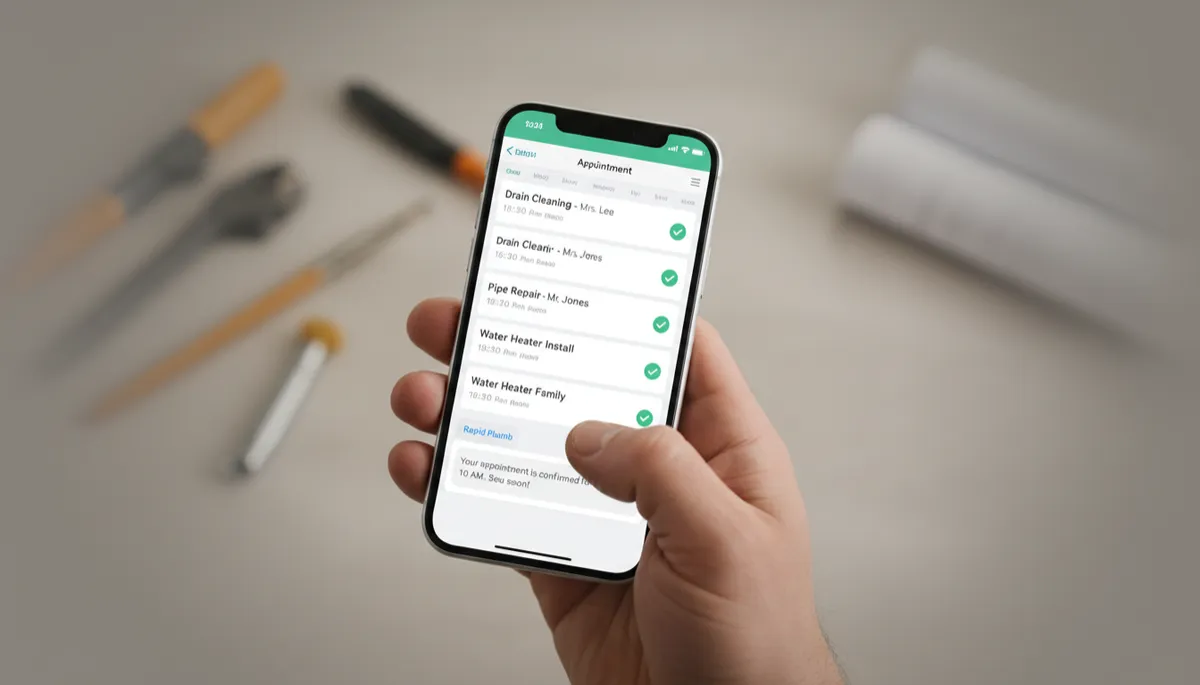
Clean, automated scheduling keeps your day full without double-booking techs.
Tools like Lindy, Muse, and Claude for Small Business specialize in exactly this kind of AI-driven scheduling and inbox management. The result is fewer no-shows, tighter routing, and more billable hours packed into each day without you babysitting the calendar.
4. Poor Online Reviews: Automated Reputation Management That Works While You Sleep
You do great work, but your Google reviews don’t show it because happy customers rarely remember to leave a review. Meanwhile, one bad experience sits at the top of your Google Business Profile for months, scaring off new leads.
AI-powered reputation management fixes this by automatically asking for reviews after every completed job and following up politely if customers don’t respond the first time. The AI can:
- Text or email a review link the same day the job closes in your CRM
- Detect negative feedback and flag it for personal follow-up
- Draft human-sounding responses to reviews for you to approve
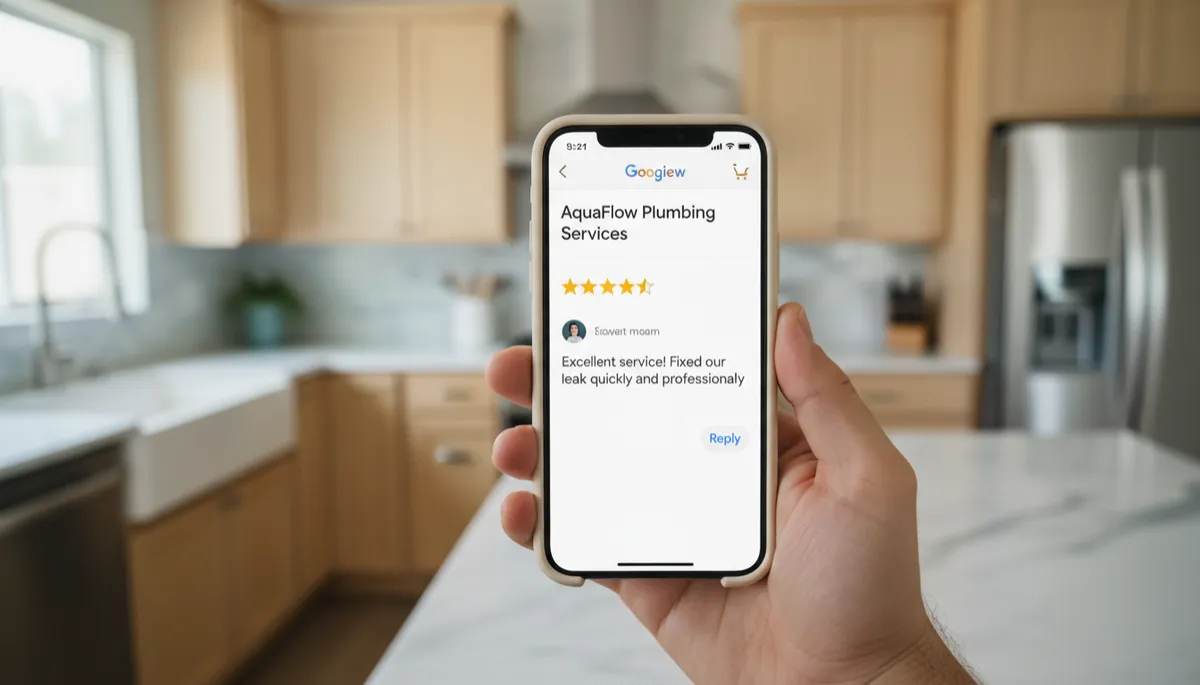
Consistent, automated review requests steadily push your rating toward 5.0.
You stay focused on the work; the system quietly grows your review count and protects your reputation over time—exactly what leading analysts predict for AI-driven customer service tools by 2026.
5. Chasing Repeat Customers: Set-and-Forget Customer Reactivation
Most plumbing revenue isn’t one-and-done. Water heaters need replacing, annual inspections prevent emergencies, and past customers are your warmest leads. But manually chasing them is the first thing to get dropped when the phone is ringing and trucks need dispatching.
With AI-powered customer reactivation, your CRM can segment customers (e.g., “no job in 12 months,” “water heater 8+ years old”) and your AI assistant can send personalized check-ins that sound like you wrote them yourself:
const customers = crm.segment('no_job_in_12_months');

customers.forEach((customer) => {
  aiAgent.sendEmail({
    to: customer.email,
    subject: 'Quick plumbing check-in',
    body: `Hi ${customer.firstName}, it's ${business.ownerName} from ${business.name}. \
We were just in your area and thought of you. \
If you’ve noticed any slow drains or weird noises, \
reply here and we’ll take a look.`
  });
});
Again, you don’t have to be a developer to use this; platforms like Zapier, Make, and Claude for Small Business give you visual builders. But this is the logic under the hood: structured AI business automation that runs every week without you lifting a finger.

While you’re under the sink, AI is quietly filling the next week’s schedule.
Bringing It All Together: One Quiet System Behind Your Plumbing Brand
The real win isn’t any single tool. It’s how these pieces connect: AI automation for local businesses that ties your calls, Google Business Profile, calendar management, and CRM management into one simple flow:
- AI answers the phone, books the job, and logs the lead.
- AI syncs the appointment to your calendar and sends confirmations.
- After the job, AI requests a review and updates your CRM.
- Months later, AI follows up to bring that customer back.
Where to Start (Without Getting Overwhelmed)
You don’t have to “go full robot” overnight. Pick the one pain that hurts the most right now:
- Constantly missing calls? Start with an AI receptionist and simple call routing.
- Estimates slipping through the cracks? Automate one follow-up sequence from your CRM.
- Weak online presence? Turn on automatic review requests after every job.
Ready to Let AI Handle the Grind?
If you’re tired of juggling the torch, the phone, and the schedule all at once, AI isn’t some distant future—it’s a practical tool you can put to work in your plumbing business this month. Start with one workflow, prove it saves you time and lost jobs, then build from there.
On The Contractor’s Playbook, we help owners like you design AI systems that feel like a dependable office manager working behind the scenes. When you’re ready, we can map your calls, calendar, and follow-up into a simple, automated flow—so the next time you’re under a sink, you know the business is still moving forward.